


Woll Types
Austrian Mountain Sheep Wool -
Authentic. Robust. Regional.
When it comes to regional origin, natural quality and true durability, we rely on the very best the Alps have to offer: wool from Austrian mountain sheep. It represents heritage, character and authenticity – shaped in the heart of the Alpine landscape, where wool has been part of everyday life and craftsmanship for centuries.
In this article, you will discover everything about the properties, benefits and applications of local Austrian mountain sheep wool – from its history to practical tips on proper care.
Contents
-
The Mountain Sheep
- Definition & Origin
- Appearance & Characteristics
- Breeding and Wool Production
-
What Makes Austrian Mountain Sheep Wool So Special?
- Regional Responsibility & Sustainability
- Key Properties & Benefits at a Glance
-
Applications of Mountain Sheep Wool
- Blankets & Interior Collections
- Clothing & Traditional Wear
- Upholstery & Interior Textiles
-
Care of Mountain Sheep Wool
- Tips for Washing, Drying & Storage
- Structure of the Wool Fibre
- History, Economic Importance and Current Challenges
Austrian Mountain Sheep Wool
Properties & Benefits
Exceptional Durability
Maintains structure, volume and character for many years.
Naturally Temperature-Regulating
Keeps you comfortably warm in winter and balanced in summer.
Moisture-Absorbing
Absorbs up to 30% of its weight in moisture while remaining dry to the touch.
Naturally Odor-Resistant
Stays fresh longer – ideal for everyday wear and outdoor use.
Protected by Natural Lanolin
Repels dirt and moisture while supporting the fiber’s resilience.
100% Natural & Biodegradable
Returns to nature at the end of its life

Naturally Acoustic
Enhances interior comfort by softening sound and reducing reflection.
Naturally Wind-Resistant
Provides reliable protection thanks to its dense fiber structure.
1. The Mountain Sheep
1.1 Definition & Origin
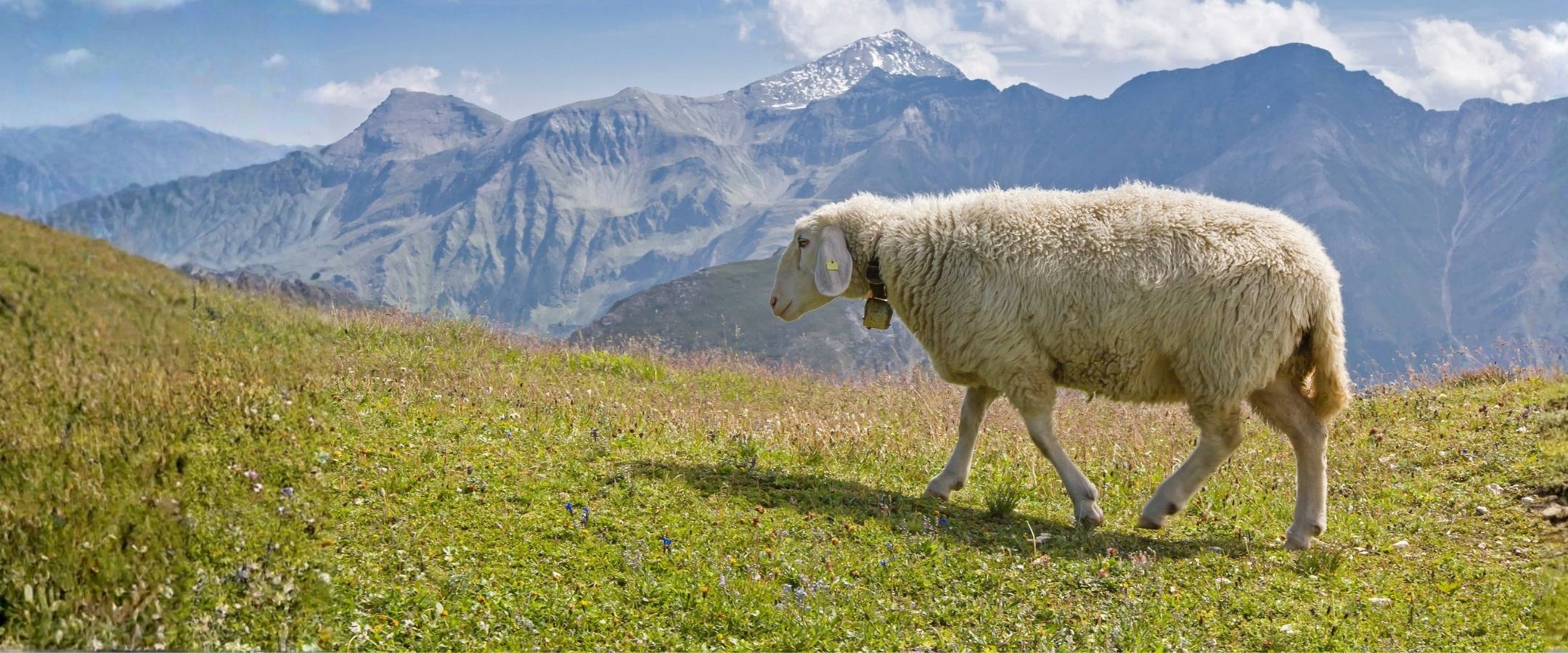
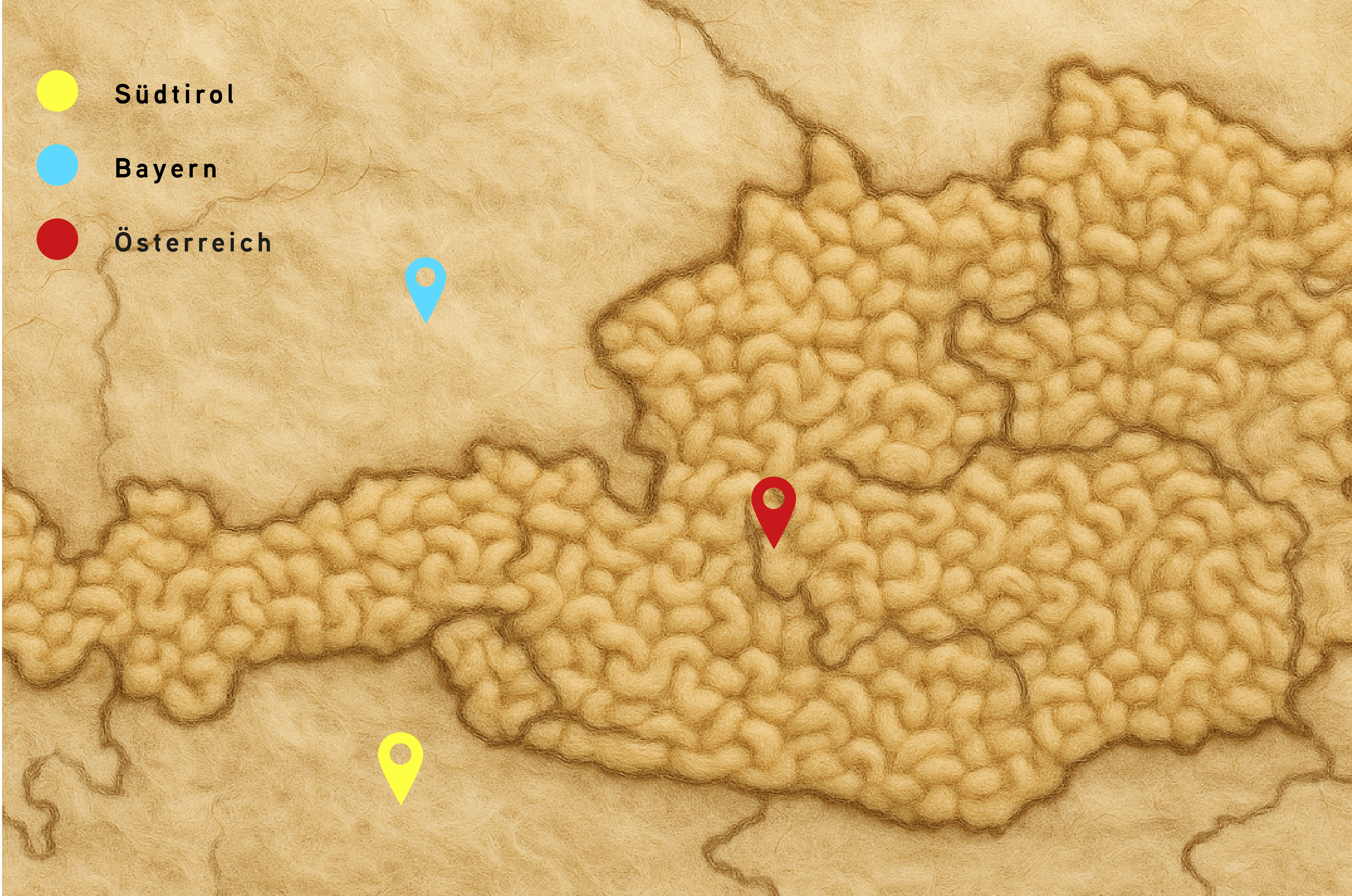
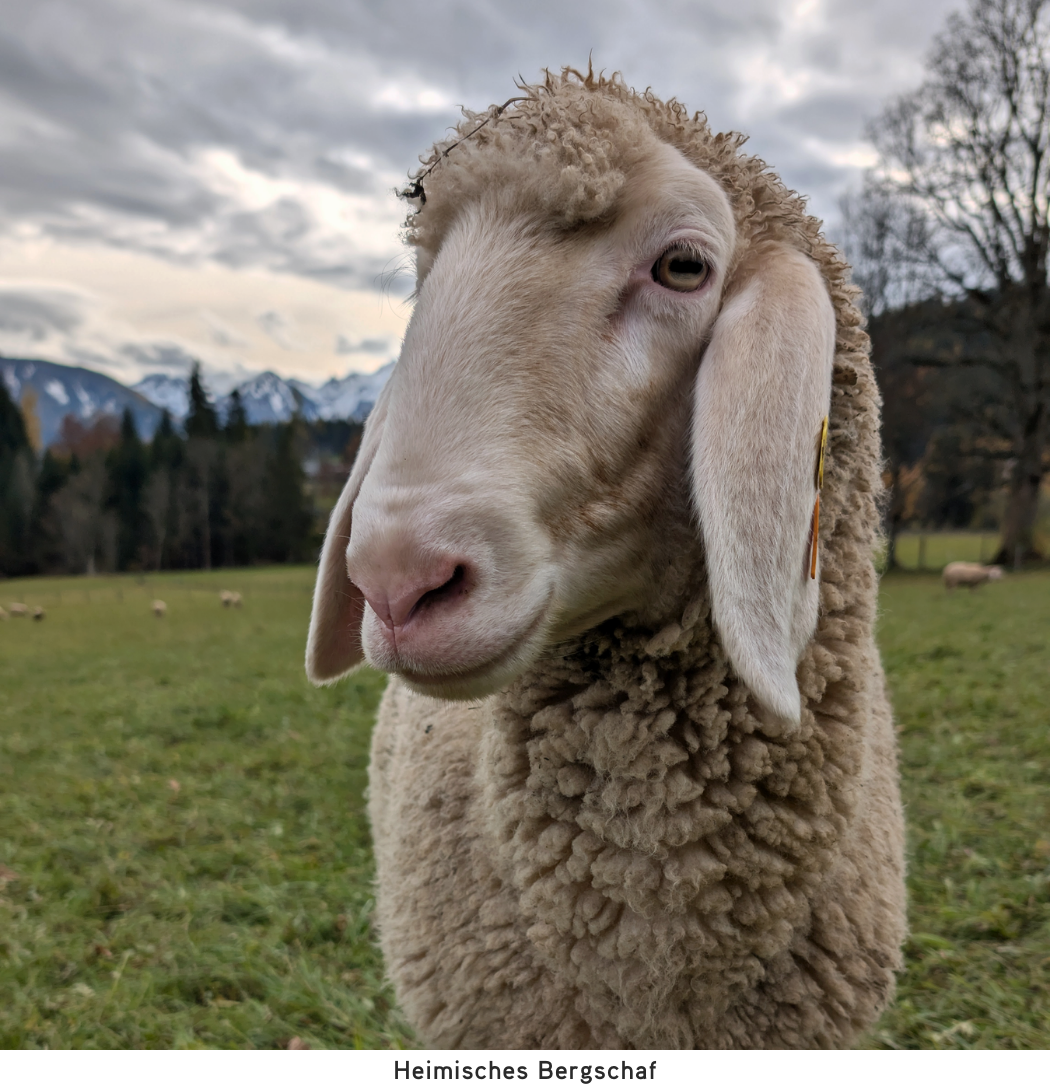
Mountain sheep wool refers to the wool of several sheep breeds traditionally raised in the alpine regions of Central Europe. These include primarily areas such as Austria, South Tyrol, Bavaria and parts of Switzerland, where robust sheep breeds have developed over centuries, well adapted to life in the mountains.
The keeping of these animals is closely connected to traditional Alpine pasture farming. During the summer months, the sheep graze on high mountain pastures, while in winter they are brought back down to the valleys. This traditional form of land management continues to shape the cultural landscape of the Alps and contributes to the preservation of valuable mountain grasslands.
The wool of mountain sheep develops under the particular climatic conditions of the mountains. Temperature fluctuations, wind and precipitation influence the growth of the fleece and give the fibres their characteristic structure and resilience.
1.2 Sheep Breeds
The term “mountain sheep” refers to several robust sheep breeds that have been raised in the Alpine region for centuries. They are exceptionally well adapted to the harsh conditions of alpine pastures and high mountain grazing areas and form an important part of traditional sheep farming in the Alpine regions.
Among the best-known mountain sheep breeds in the Alps are:
- Tyrolean Mountain Sheep (the most common breed in the Ennstal region)
- Brown Mountain Sheep
- Tyrolean Stone Sheep
- Jura Sheep
- Valais Blacknose Sheep
- White Alpine Sheep
This diversity reflects the regional identity and cultural heritage of Alpine sheep farming – a living tradition that continues to be maintained and preserved to this day.
Further information about the individual mountain sheep breeds can be found at the Austrian Association for Sheep and Goats .
Some of the information used in this section is based on specialist content published there.
Our Austrian Mountain Sheep Wool
At Steiner1888, we source our mountain sheep wool from the Ennstal region – directly from farmers we know personally. Close collaboration with local sheep farmers and short transport routes are a natural part of our responsibility towards animals, nature and the region.
At present, we are unable to accept additional wool, as our warehouses are well stocked. In the long term, however, we aim to process more locally sourced wool again and actively support our regional sheep farmers. Through new ideas and products, we demonstrate how valuable, versatile and future-proof regional mountain sheep wool can be – and hope to further strengthen awareness of this exceptional natural material.
1.3 Breeding and Harvesting of Austrian Mountain Sheep Wool
The breeding of Austrian mountain sheep is primarily concentrated in the Alpine regions. The animals live in rhythm with the seasons – spending the summer on alpine pastures and the winter in the valleys. This natural and species-appropriate way of keeping sheep not only promotes animal welfare but also contributes to the characteristic robustness and durability of the fibres.
Methods of Wool Harvesting
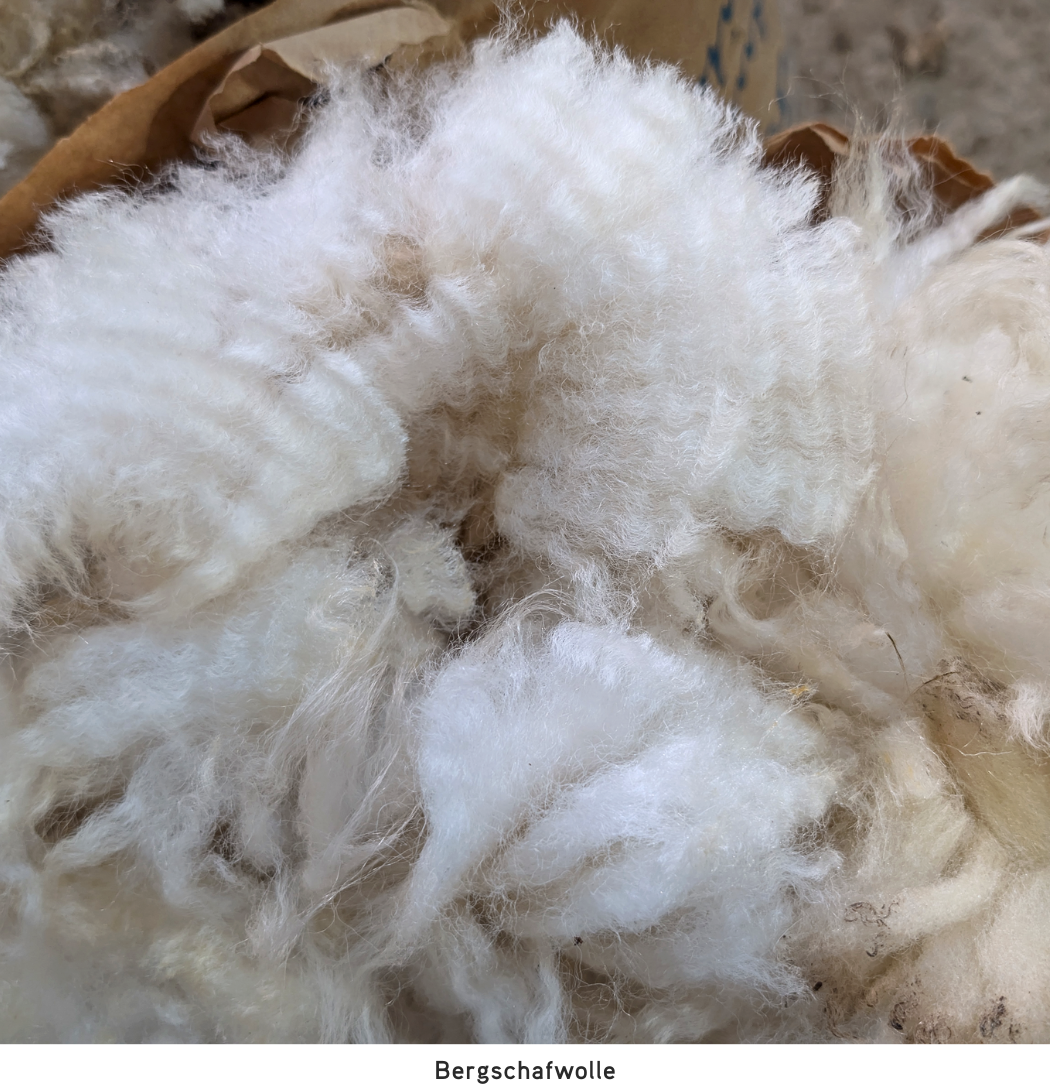
- Shearing Wool: In Austria, wool is almost exclusively obtained by shearing living animals. This is considered the most valuable wool quality, as it is carefully shorn once or twice a year and meets the highest standards of hygiene, sustainability and fibre quality.
- Lamb’s Wool: The first fleece of young sheep, known for its particularly soft and fine fibres, is also used.
- Other Types of Wool: Skin wool, sweat wool, tannery wool or fallen wool may occasionally arise as by-products in Austria. However, they are not used for high-quality textiles and are instead directed to technical or agricultural applications such as insulation materials or fertiliser pellets.
Within a single fleece, fibre quality can vary: wool from the shoulders, neck and sides is generally finer and more uniform, while wool from the head, belly and legs tends to be coarser and less valuable.
Shearing usually takes place once a year, typically in spring or autumn. The fleece is removed in one piece, then sorted and evaluated according to fibre fineness, colour and purity. Wool from the back and sides is especially prized for its even and durable structure.
After shearing, the wool is gently washed to remove impurities. Depending on the level of soiling, the cleaning process reduces the raw weight of the fleece by around 30–50% before the wool is prepared for further processing.
Shearing and Sorting
Sheep are generally shorn twice a year – in spring before they are driven up to the alpine pastures, and in autumn after returning to the valleys. Shearing is an important part of animal care and provides valuable, renewable wool.
The fleece obtained is then divided into different sections to achieve as uniform a quality as possible and to ensure the wool can be processed efficiently. Even within a single fleece, wool quality varies: fibres from the shoulders, neck and sides of the animal are particularly fine and even, and therefore considered the most valuable. Wool from the head, belly or legs is usually coarser and is therefore used for simpler applications.
Cleaning the Wool
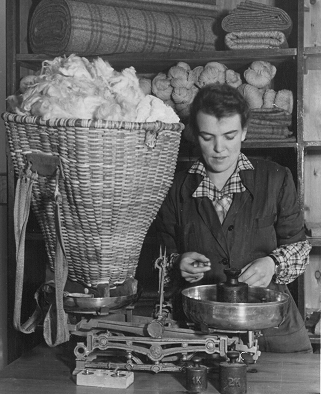
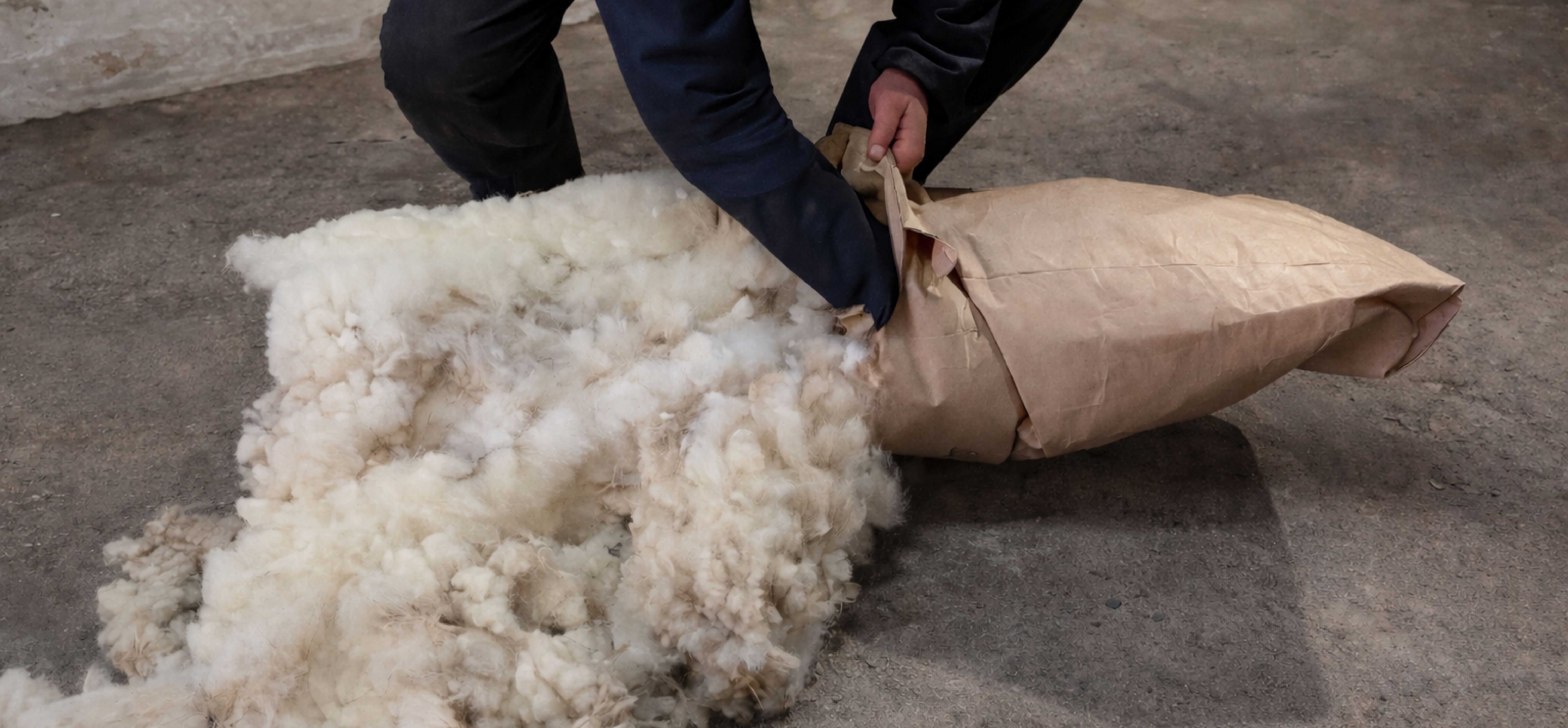
Freshly shorn wool naturally contains residues such as wool grease (lanolin), sweat, dust, soil and plant matter. These components can account for around 40–50% of the raw weight. Through careful industrial washing, the wool is cleaned and prepared for further processing.
- Raw or Grease Wool: unwashed wool directly after shearing
- Mill-Washed Wool: industrially cleaned wool in which dirt, wool grease and plant residues have largely been removed. If necessary, remaining plant matter can additionally be eliminated through a special process known as carbonising.
2. What Makes Mountain Sheep Wool So Special?
Mountain sheep wool is characterised by a range of natural properties that make it a particularly durable and versatile natural material.
- Robust and durable – The strong fibre structure makes mountain sheep wool especially hard-wearing. It is therefore ideal for loden fabrics and textiles that retain their shape and stability for many years.
- Warming and temperature-regulating – Air trapped within the wool fibre provides excellent insulation and supports a balanced natural climate.
- Naturally dirt- and water-repellent – The natural wool grease (lanolin) protects the fibres. Dirt adheres less easily and can often simply be brushed away.
- Shape-retaining and resilient – Even with intensive use, the fabric remains stable and retains its volume and characteristic handle.
- Distinctive texture – The structured fibre gives fabrics made from mountain sheep wool a natural and authentic feel.
These qualities make mountain sheep wool particularly valuable for durable textiles and traditional fabrics such as loden.
Its natural resilience, thermal performance and ease of care have made it a trusted material in the Alpine region for
generations – both for clothing and interior textiles.
2.1 Regional Origin & Responsibility
Choosing a product made from locally sourced mountain sheep wool means choosing more than just a textile. It is a conscious decision in favour of regional raw materials, responsible production and respectful treatment of nature and animals. Wool sourced locally means short transport routes, transparent origins and value creation that remains within the region.
At Steiner1888, we place great importance on this connection between origin, craftsmanship and quality. Short transport routes and careful processing ensure that the natural character of the wool is preserved – as well as the artisanal knowledge that has been passed down through generations.
Local wool therefore also represents a deliberate counterpoint to the fast pace of modern fashion. It stands for durable materials, timeless products and production designed for longevity. Choosing such products means choosing quality, provenance and a respectful approach to a valuable natural material.
3. Key Characteristics & Benefits
| Property | Your Benefit |
| Strong, structured fibre | Excellent grip, durable and long-lasting |
| High lanolin content | Naturally dirt- and water-repellent |
| Breathable & temperature-regulating | Comfortable climate in both summer and winter |
| Shape-retaining & robust | Less pilling, ideal for heavily used products |
| 100 % natural & biodegradable | A renewable raw material with responsible origin |
| Regional origin from Austria | Short transport routes and support for local agriculture |
| Sound-absorbing | Naturally reduces noise – ideal for furniture and interior design |
No good or bad wool – it’s all about the right application
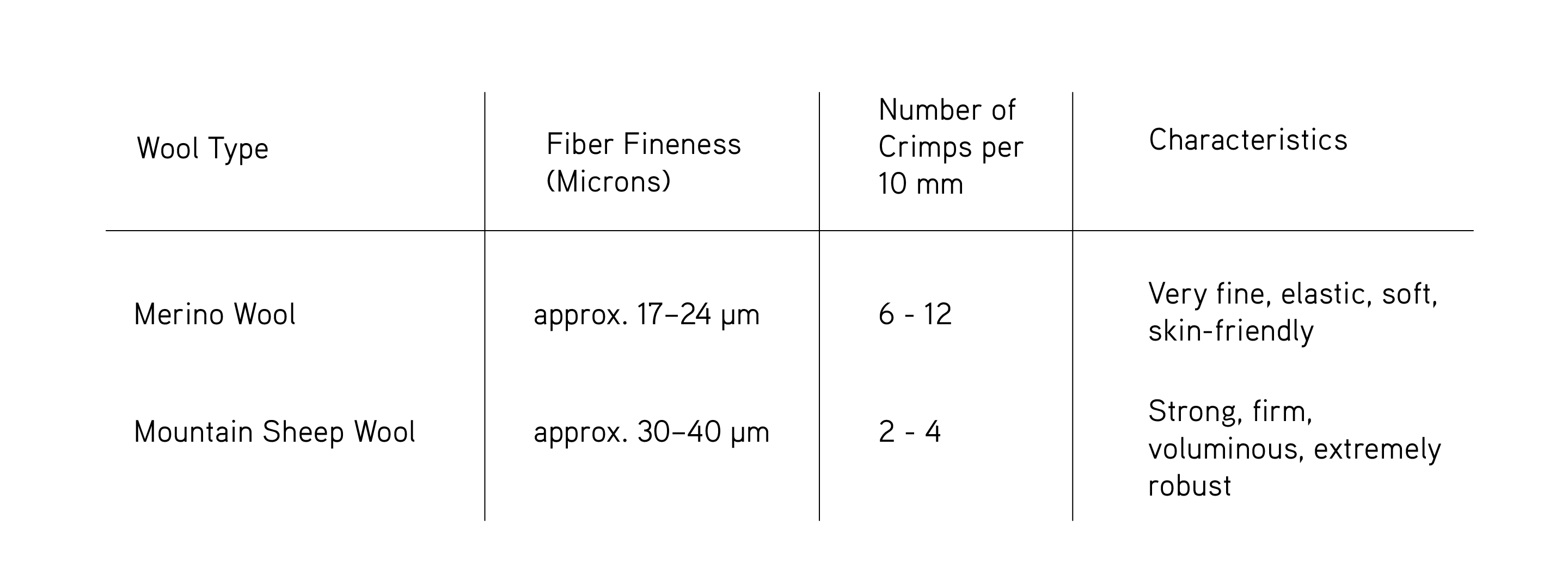
Whether mountain sheep wool, merino wool or cashmere: each type of wool has its own unique strengths. There is therefore no such thing as “good” or “bad” wool – what matters is choosing the right fibre for the right purpose. Coarser fibres are ideal for durable loden fabrics, robust wool blankets or hunting clothing. Finer wools, on the other hand, stand out for their softness and elasticity – making them perfect for garments worn directly against the skin, as well as for baby and children’s clothing. Only through the appropriate processing do the distinctive qualities of each type of wool fully unfold.
Fineness
Fineness (1–8 dtex) varies significantly, as does the length of the wool fiber (approx. 12–70 mm). In general, the shorter a wool fiber is, the finer it tends to be. For example, the fiber diameter of merino wool ranges from 16–24 µm, crossbred wool from 25–37 µm and above, and Cheviot wool from 32–40 µm. The diameter may vary considerably from root to tip, a characteristic known as “uneven wool.” The more uniform the fineness (“evenness”) of individual wool fibers, the more consistent and tensile-strength-resistant the resulting yarn will be.
Crimp
The crimp of wool fibers is usually three-dimensional. Fine wools almost always exhibit a higher degree of crimp than coarser wools. This is due to the proportion and distribution of the ortho- and paracortex within the fiber structure. Depending on the type and number of crimp waves, wool is generally classified as having low, medium, or high crimp.
In addition to the elasticity of the wool fiber, crimp is a key factor in determining the bulkiness of fibers, yarns, and textile surfaces. The higher the crimp, the greater the amount of air trapped between the fibers, increasing fullness (volume) and resulting in excellent thermal insulation. However, excessively high crimp can cause difficulties during spinning. In such cases, the fibers are often partially decrimped by stretching under the influence of steam.
4. Applications of Mountain Sheep Wool
Mountain sheep wool is a versatile natural raw material and forms an important foundation for a variety of product categories at Steiner1888. Its robust fibre structure, natural volume and distinctive handle give textiles exceptional durability and authenticity.
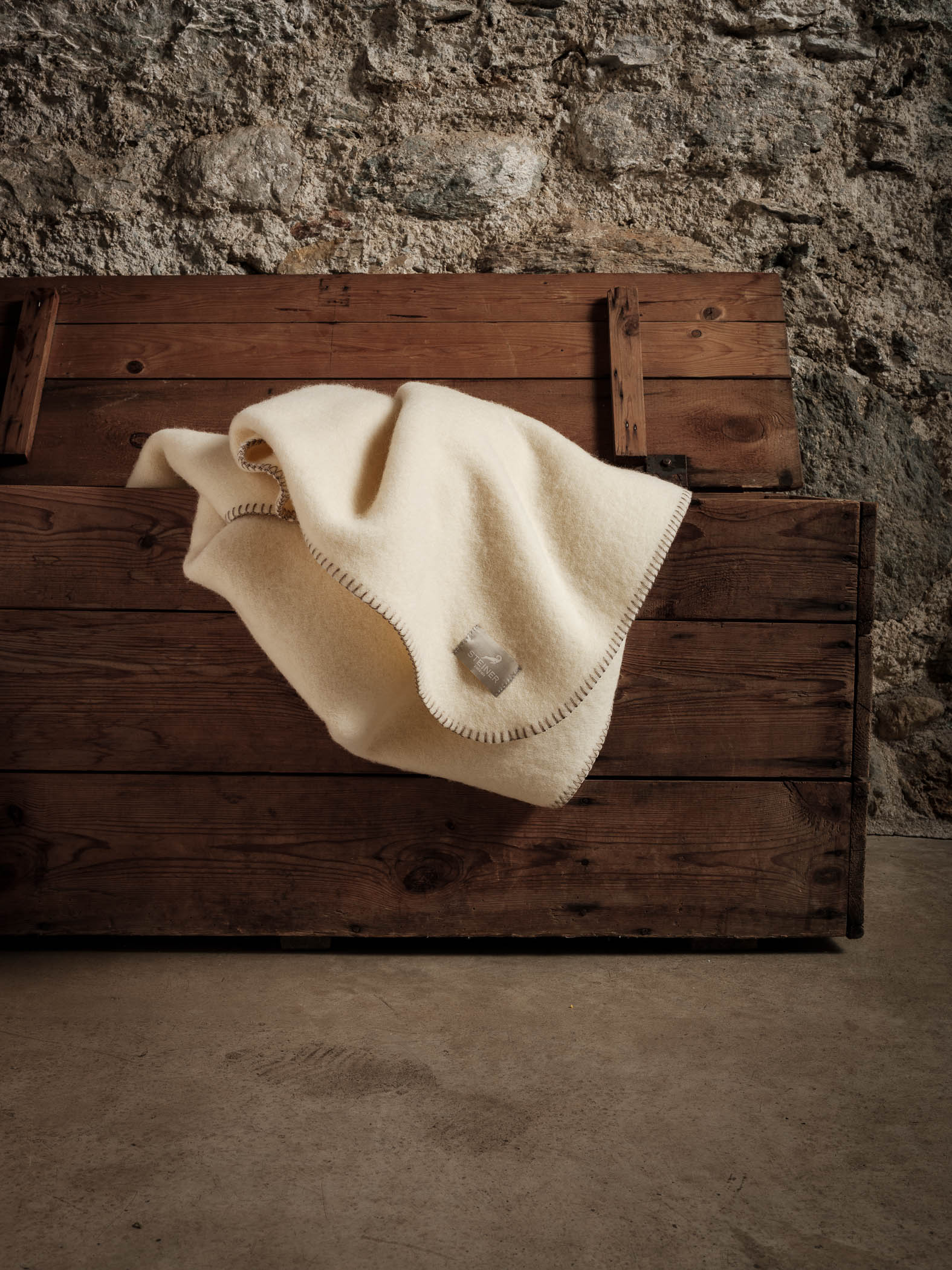
Blankets & Interior Collection
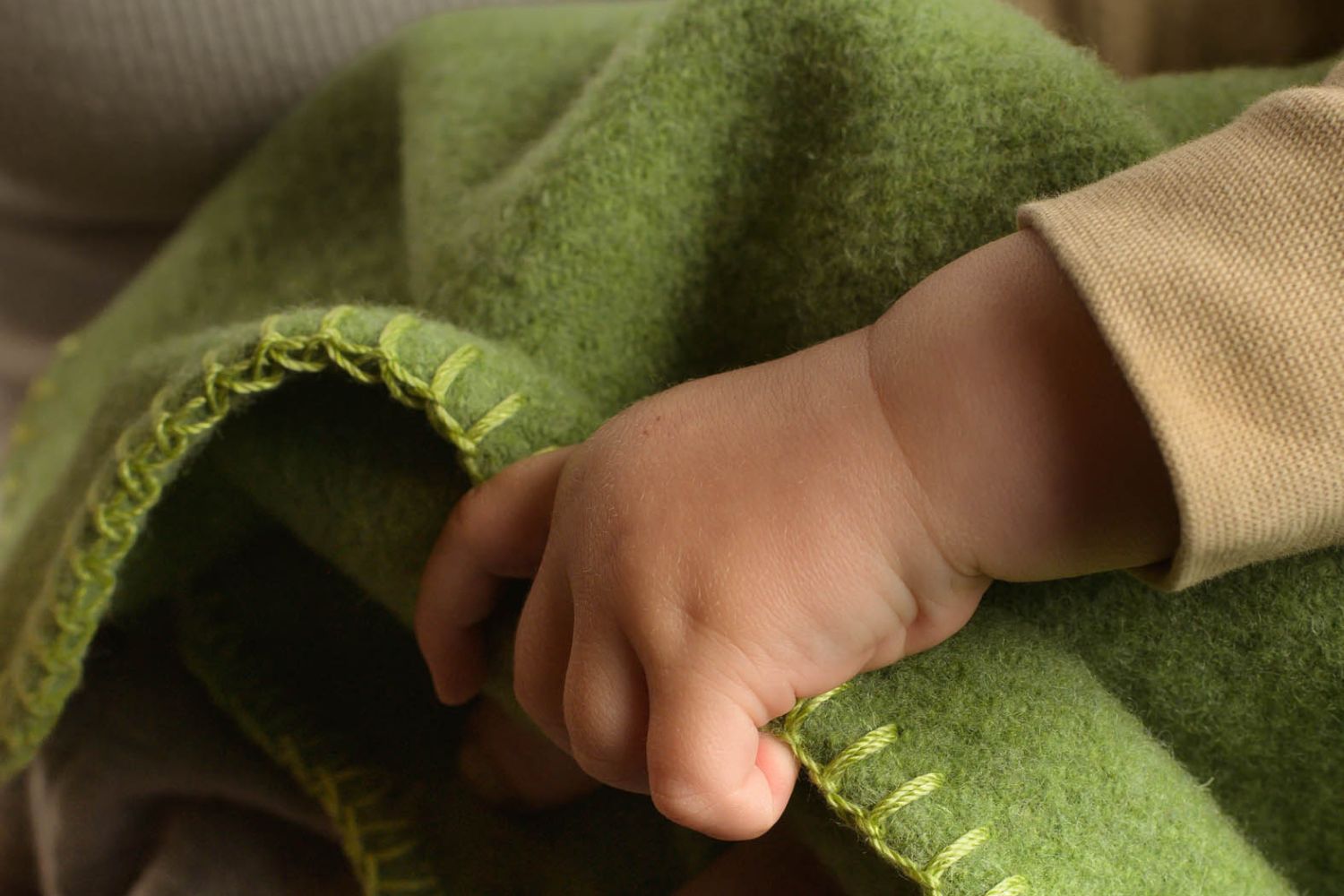
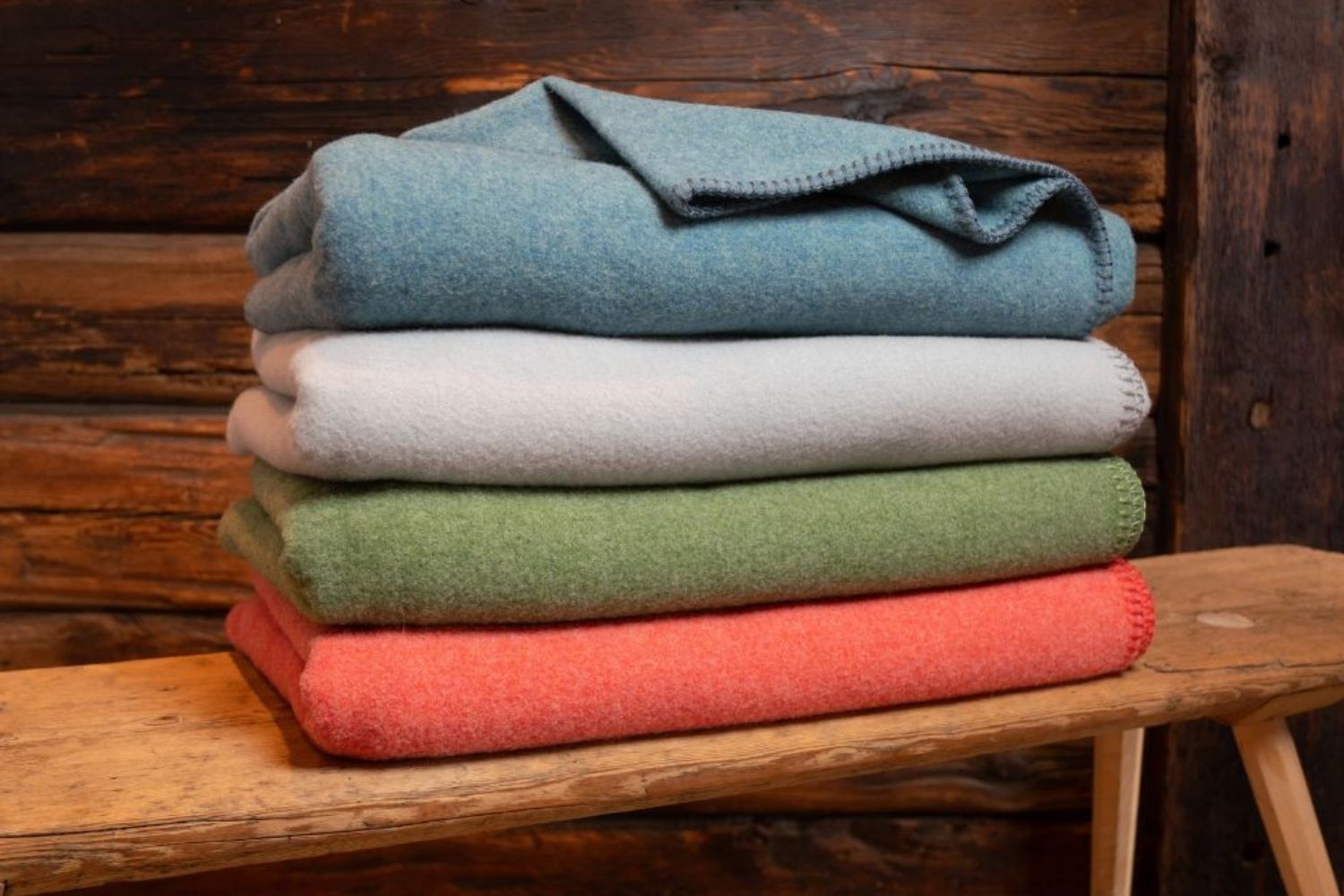
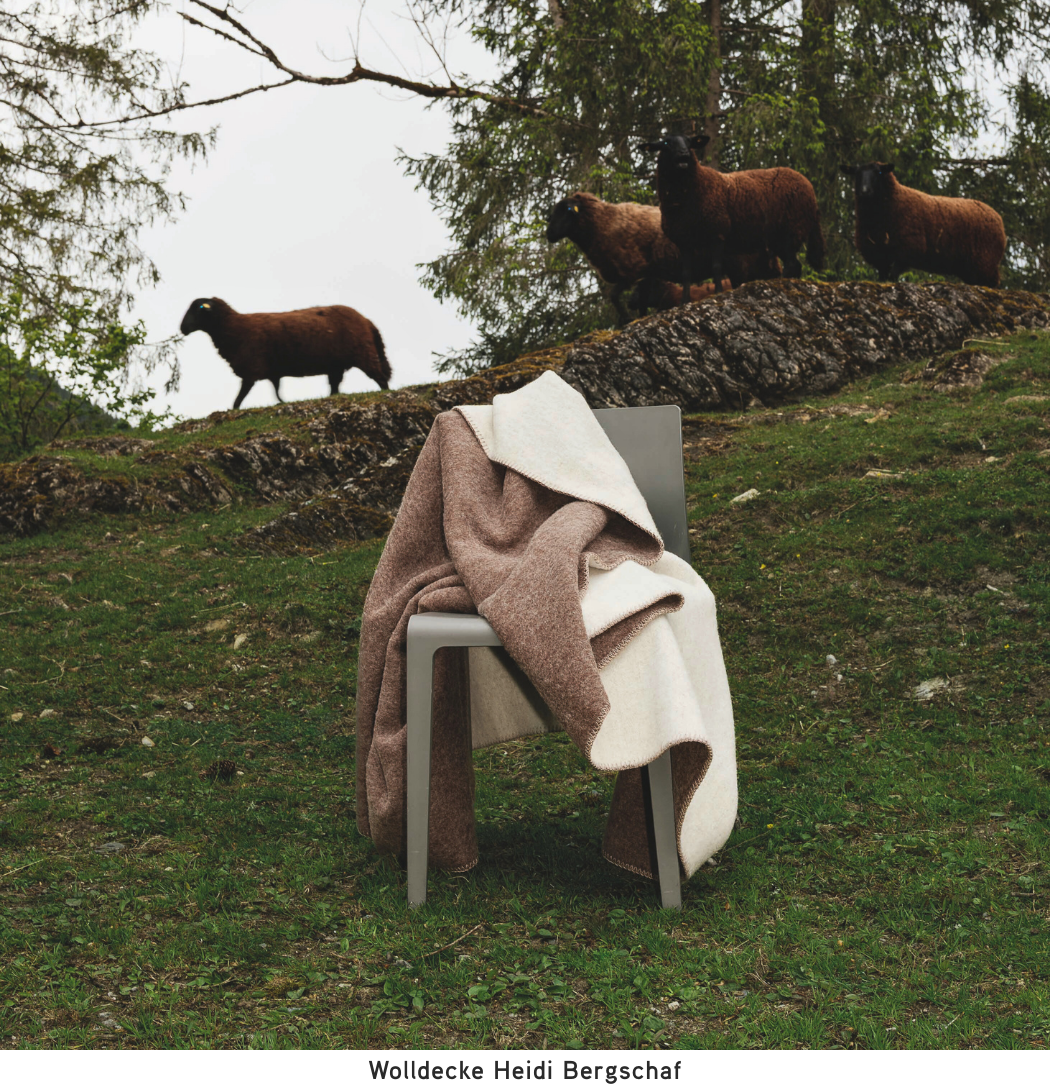
In our interior collections, mountain sheep wool plays a key role – particularly in the Heidi and Heidi Double lines. These blankets are distinguished by their natural colour tones, noticeable warmth and the characteristic, lively texture of mountain sheep wool.
The special qualities of this fibre are also used in our new sleeping blanket, which is made from 50% mountain sheep wool. It combines natural warmth with breathable properties, creating a comfortable and balanced sleeping climate.
Mountain sheep wool is also used in selected accessories, such as fulled wool socks and mittens. The natural resilience of the fibre ensures long-lasting products with a distinctive handle and excellent functionality. All products reflect the combination of regional raw material heritage, careful craftsmanship and timeless quality.
Clothing & Tradition
Mountain sheep wool is also used in clothing due to its resilient fibre structure. It combines natural warmth with high durability and helps maintain a balanced body climate – qualities that make it particularly suitable for robust clothing fabrics.
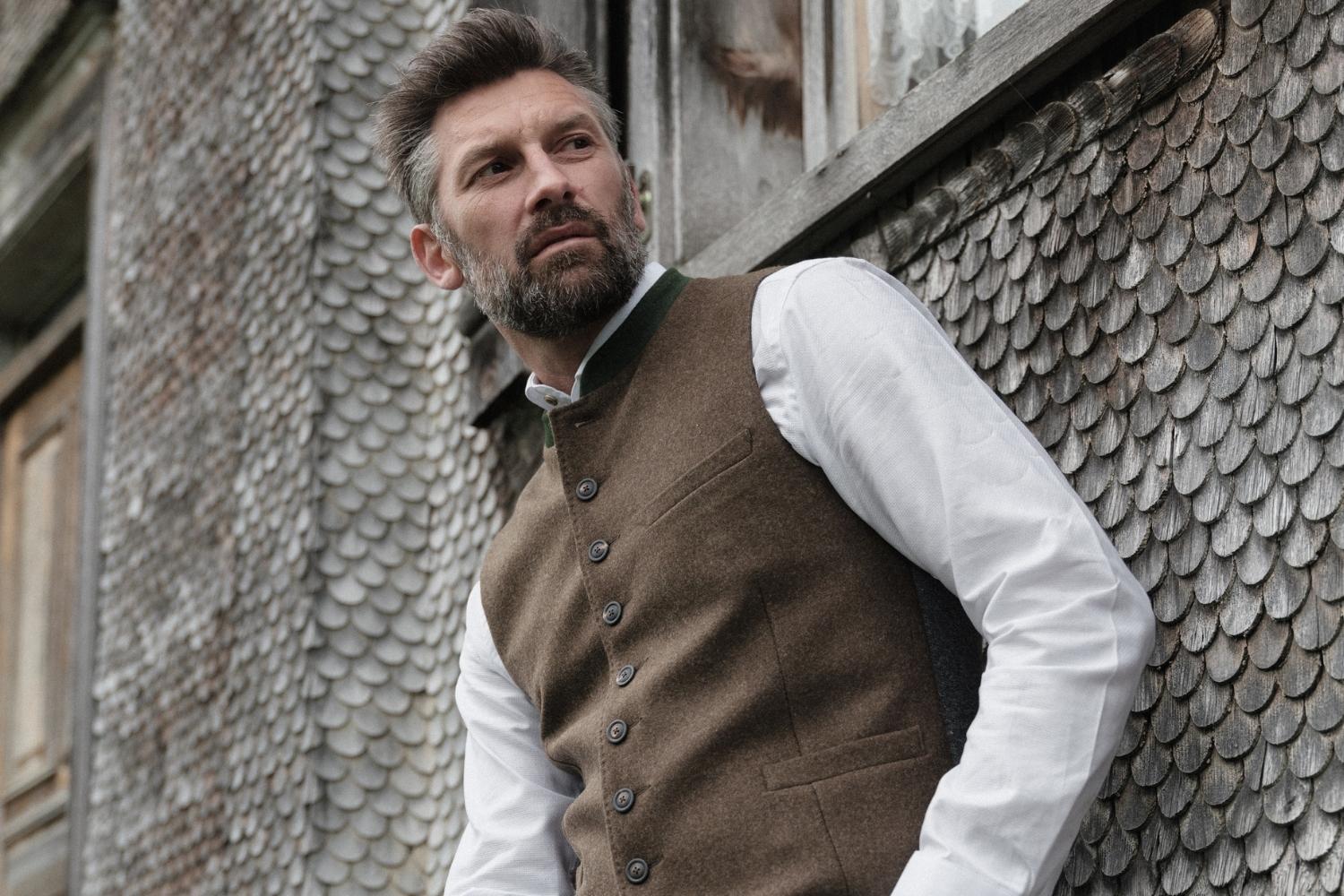
A traditional example is the Schladminger Janker. Made from locally sourced wool, it represents the connection between regional raw materials, traditional craftsmanship and Alpine clothing heritage. Its distinctive appearance and long-lasting quality make it a timeless expression of Austrian textile culture.

Upholstery Fabrics & Interior Applications
Another important application of mountain sheep wool is its use in upholstery and interior fabrics. Thanks to its robust fibre structure, natural volume and high shape stability, it is particularly well suited for durable upholstery fabrics, coverings and wall textiles.
In addition to its durability, mountain sheep wool also offers functional properties that are highly valued in interior design. The naturally crimped structure of the wool fibres forms numerous small air pockets that absorb sound and can contribute to a pleasant room acoustics.
Furthermore, wool helps regulate the indoor climate through its ability to absorb and release moisture. Mountain sheep wool therefore combines natural material quality, functional performance and a distinctive textile surface.
At Steiner1888, products made from mountain sheep wool represent Slow Fashion and Slow Living. They are produced regionally, processed with care for resources and are fully biodegradable. Short transport routes, traditional craftsmanship and the use of natural materials result in long-lasting products created in harmony with people, animals and nature.
With every piece made from locally sourced wool, regional value creation is supported, cooperation with Austrian sheep farmers is strengthened and the preservation of a living craft tradition is encouraged. This is how sustainable quality is created – authentic, enduring and rooted in the Alps.
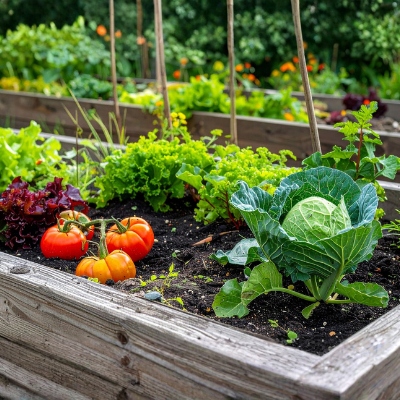
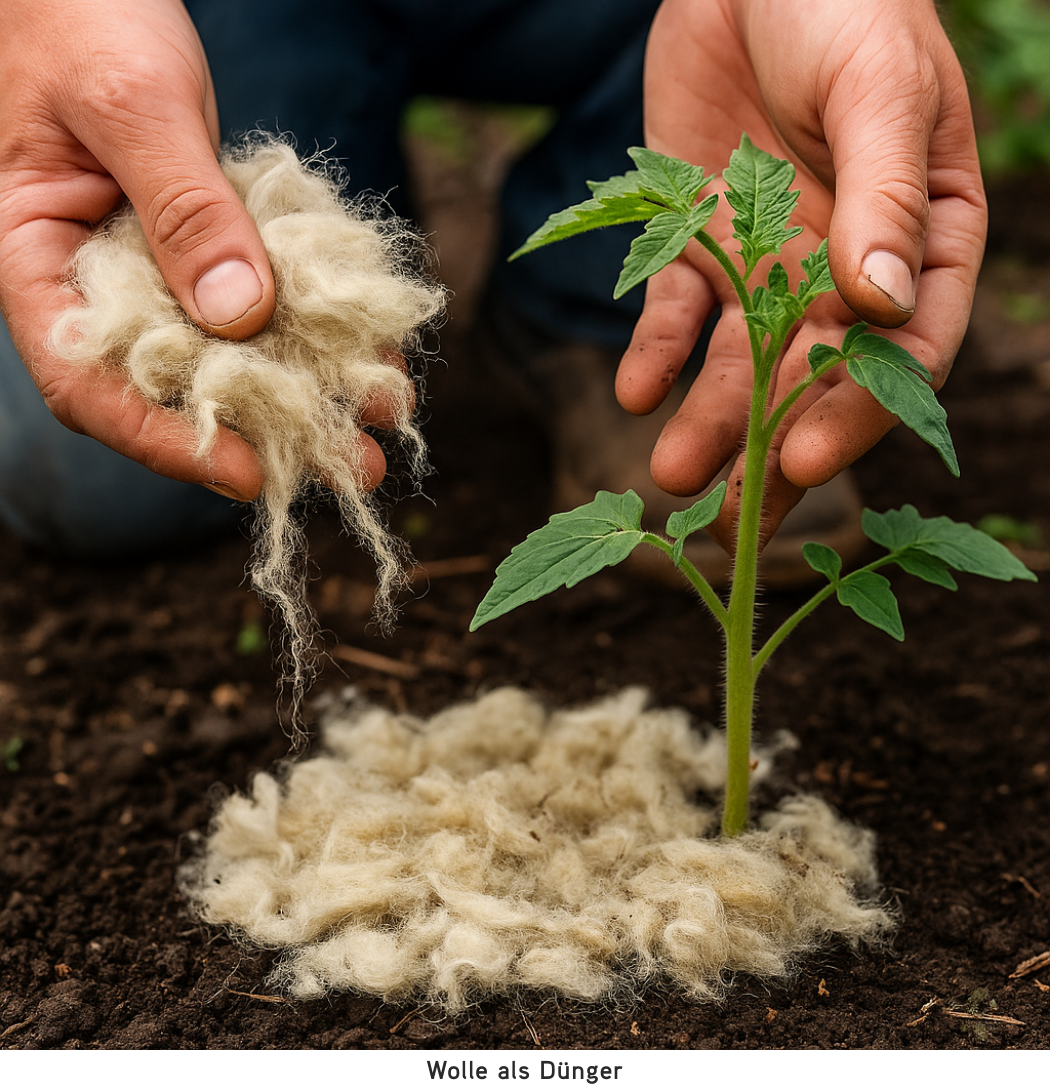
Sheep Wool as a Natural Fertiliser
Unwashed mountain sheep wool is an excellent organic slow-release fertiliser for gardens, raised beds and plants. It contains valuable nutrients such as nitrogen, which are released gradually into the soil over an extended period.
In addition to providing nutrients, sheep wool also improves soil structure. The fibres loosen the soil, support microbial activity and enhance water retention, ensuring a more consistent supply for plants.
Furthermore, sheep wool helps protect the soil from drying out, can be used as mulch, and supports sustainable, natural plant growth in the garden. For more information, please visit our fertiliser page.
5. Care of Mountain Sheep Wool
Mountain sheep wool is considered particularly robust and easy to care for. Thanks to its natural fibre structure and the presence of wool grease (lanolin), dirt usually only adheres to the surface and can often be removed simply by gentle brushing.
Regular airing is often sufficient to refresh the wool, as it does not easily retain odours.
If heavier soiling does occur, it can usually be treated gently with cold water and a mild wool detergent. Due to its strong fibre structure, mountain sheep wool is sensitive to excessive heat, strong friction or vigorous wringing. For this reason, textiles made from mountain sheep wool should always be dried flat.
This helps preserve the shape, handle and natural quality of the wool over time.
On our care page you will find further practical advice on cleaning and stain removal – from everyday marks to specific cases such as red wine or grease. This will help you preserve the natural beauty of your mountain sheep wool product for many years to come.
6. Structure of the Wool Fibre
The composition of a wool fibre depends on the breed and origin of the sheep, but one principle always applies: the main component of all animal fibres is protein, particularly keratin. This unique protein forms an extremely elastic and resilient fibre due to its spiral molecular structure. The degree of polymerisation (DP value) of wool is around 100, making it one of the most complex natural fibres. The fibre body itself is divided into several layers:
Scale Layer (Cuticle)
The cuticle forms the outer layer of the wool fibre and consists of overlapping scale cells. It protects the fibre and is responsible for characteristic properties such as felting ability and dirt resistance. Three layers can be distinguished:
- Epicuticle (outer membrane): water-repellent to liquid droplets but permeable to water vapour – ideal for moisture management.
- Exocuticle: hardened and scale-like; it protects the fibre from abrasion and gives wool its felting capability.
- Endocuticle: serves as structural support and separates the cuticle from the inner fibre.
Cortex (Spindle Cell Layer)
The cortex forms the main part of the fibre. It consists of millions of spindle-shaped cells, which are divided into two areas:
- Orthocortex: chemically less stable, more extensible and highly absorbent.
- Paracortex: more stable, less absorbent and less extensible.
Medulla (Core Layer)
The medulla is a central cellular layer that is particularly pronounced in coarser types of wool. It can reduce the softness of the fibre. Finer wool types, especially merino, contain only very small medullary islands or are almost medulla-free – which explains their exceptional softness.
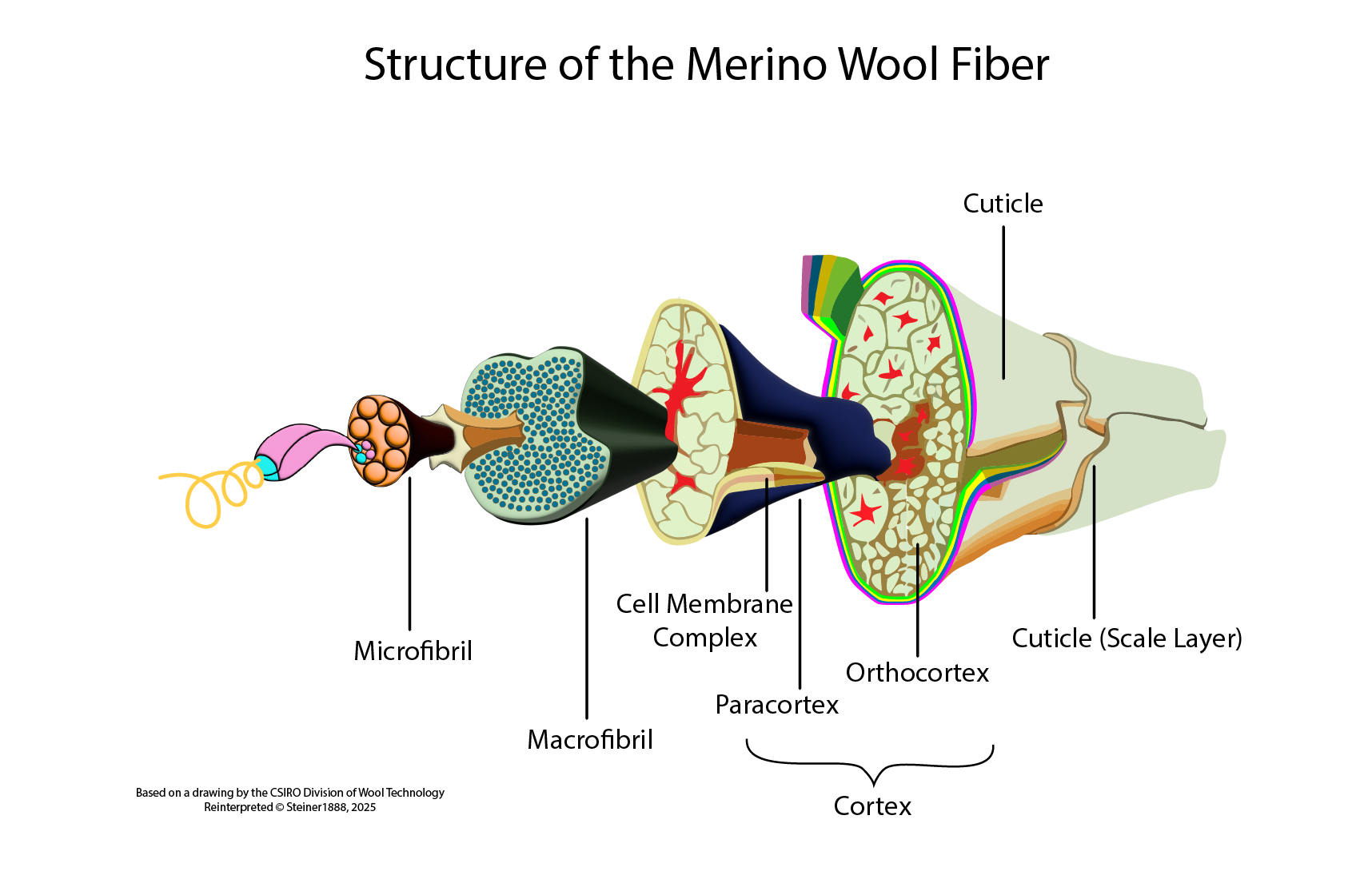
The interaction of these two layers creates the natural crimp of the wool fibre – a key characteristic responsible for its thermal insulation and elasticity. The cells are held together by a natural binding substance, lanolin (wool grease). It keeps the fibre supple and provides natural water- and dirt-repellent properties.
7. History, Economic Importance and Current Challenges
7.1 History of Mountain Sheep Wool
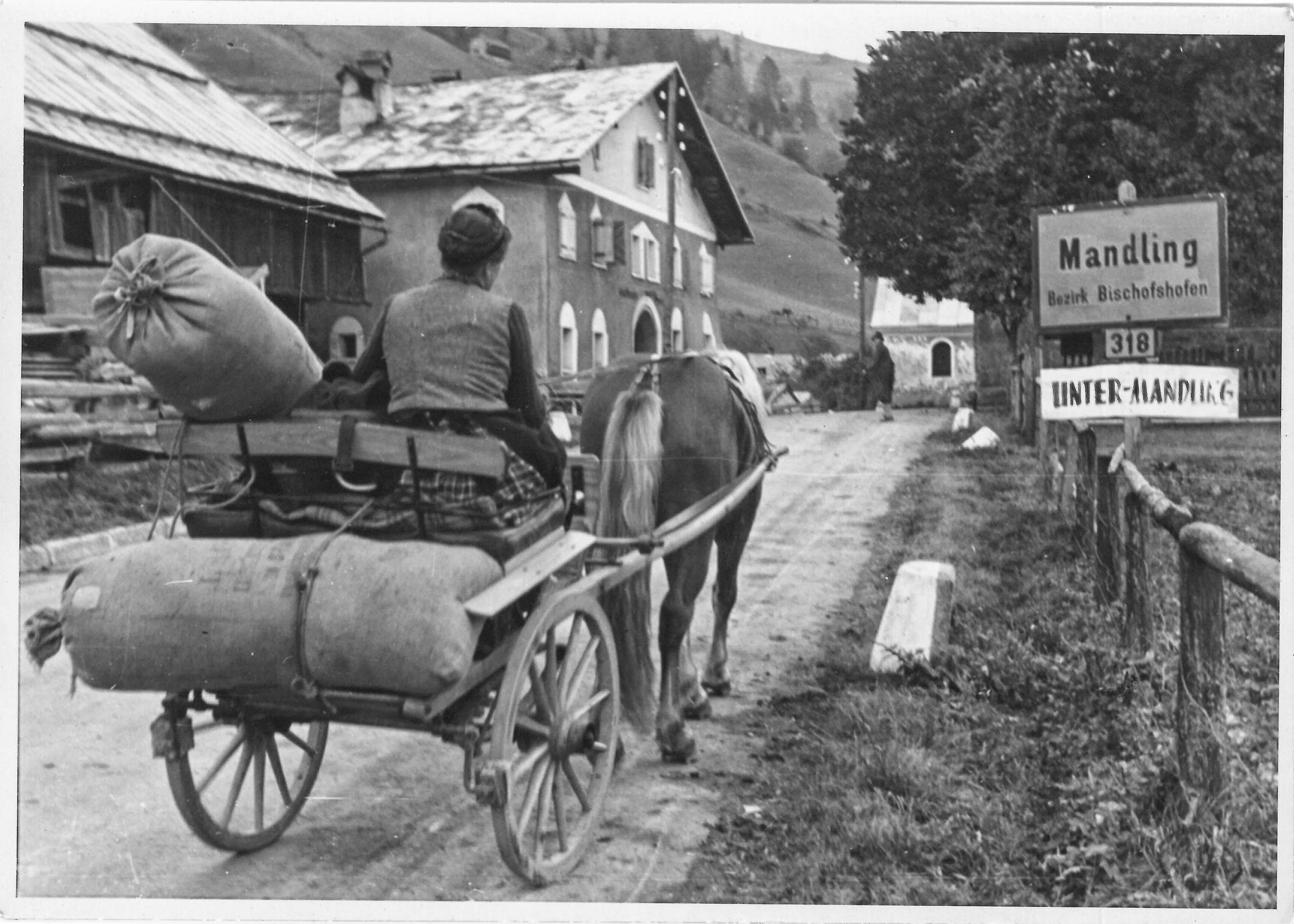
Mountain sheep wool has a long and deeply rooted history in the Alpine region. For centuries, mountain sheep have been raised in Austria, South Tyrol and Bavaria – robust, hardy animals perfectly adapted to the harsh alpine climate. Their wool was used early on as a raw material for loden and fulled wool fabrics, which provided reliable protection against wind, cold and moisture thanks to their natural density and durability.
Particularly in regions such as the Ennstal, the Salzkammergut and Tyrol, sheep farming became an integral part of the Alpine cultural landscape. In addition to meat and milk, wool represented a valuable resource: it shaped the regional textile economy and provided many families with income and independence over generations.
With industrialisation and the increasing use of finer imported wools – especially from Australia and New Zealand – locally produced mountain sheep wool gradually lost some of its economic importance. Due to their fineness, these wools were particularly suitable for soft clothing textiles and were therefore in high international demand.
Nevertheless, mountain sheep wool has retained its unique significance. Its stronger fibre structure, natural volume and exceptional durability give it properties that other wool types cannot offer in the same way. The key lies in using the strengths of each fibre where they perform best. Wherever stability, structure and longevity are required, mountain sheep wool remains a valuable and distinctive raw material of Alpine textile tradition.
7.2 Economic Importance and Current Challenges
Today, locally sourced mountain sheep wool represents sustainability, regional value creation and the principles of slow fashion – yet its use remains economically demanding.
At Steiner1888, we source our mountain sheep wool primarily from the Ennstal and the surrounding regions. After shearing, the wool is carefully washed and prepared before it can be processed into yarn or fabric. This process is labour-intensive but essential to ensure the natural purity and quality of the fibre.
Although we would welcome a broader use of this wool, reality also shows clear limitations: due to its coarser fibre structure, local mountain sheep wool is not suitable for every product. It excels in durability and resilience but is less soft than merino or alpaca. As market demand often favours finer qualities, sales remain limited – despite available raw wool and well-stocked warehouses.
For this reason, we are currently unable to accept additional wool, although we hope to expand its use again in the long term. Our hope lies in raising awareness: a growing understanding that regional wool is a valuable and sustainable natural material that strengthens local value chains and preserves traditional craftsmanship.
Steiner1888 therefore uses locally sourced mountain sheep wool specifically in areas where its strengths can be fully appreciated:
- in interior textiles,
- in the traditional Schladminger Janker,
- in hunting and outdoor clothing,
- and in our innovative sleeping blanket, which contains 50 % locally sourced mountain sheep wool and makes optimal use of its temperature-balancing properties.
In addition, mountain sheep wool is highly suitable for felt products:
- Slippers & house shoes: mountain sheep wool felt is used for the sole because it is shape-retaining, insulating and durable. The upper is usually made from a softer merino or merino/alpaca blend to ensure greater comfort.
- Seat cushions: as a felt base, mountain sheep wool provides stability, durability and a pleasant temperature balance – even with intensive use.
Through the conscious development of selected products, such as our sleeping blanket, we aim to process more wool from the region in the future and thereby sustainably support sheep farmers in the Ennstal and beyond.